
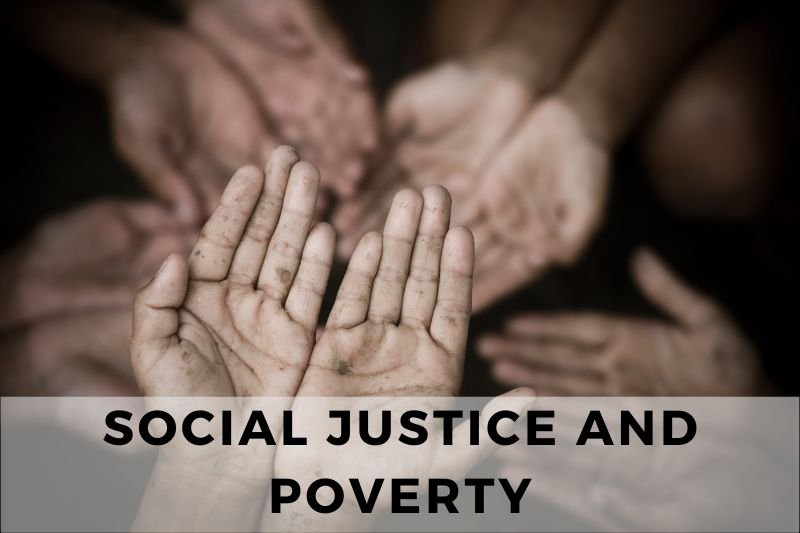
Social justice and poverty are inextricably linked. Poverty is not just an economic issue; it is a result of systemic inequities that prevent individuals and communities from accessing basic rights and opportunities.
Addressing poverty requires more than charity or temporary solutions. It demands a fundamental change in how society structures access to education, healthcare, housing, and opportunities. Social justice provides the framework to challenge these imbalances, advocating for policies that eradicate the root causes of poverty and ensure a fairer, more equitable world for all.
How Social Justice Addresses The Root Causes Of Poverty
#1. Promotes Equal Access to Education
Social justice advocates for policies that ensure all individuals have equal access to quality education, regardless of their socio-economic background. By addressing disparities in school funding and resources, social justice promotes a fairer distribution of educational opportunities.
This includes supporting free or affordable higher education, vocational training, and community-based learning initiatives. Equal access to education empowers individuals to break the cycle of poverty by equipping them with the skills and knowledge necessary to secure better employment.
#2. Advocates for Fair Wages and Employment Opportunities
Social justice works to ensure fair wages and decent work for all individuals. It calls for raising the minimum wage to a livable standard and promoting policies that reduce income inequality.
Social justice also advocates for the creation of sustainable, full-time jobs, as well as opportunities for those who are underemployed or in precarious employment. By improving wages and job security, social justice helps individuals move out of poverty and creates economic stability for families.
#3. Addresses Economic Inequality through Redistribution
Social justice promotes the redistribution of wealth and resources to reduce the gap between the rich and the poor. This can be achieved through progressive taxation, universal basic income, and wealth-sharing initiatives.
Redistribution policies ensure that wealth is more equally distributed across society, enabling the most disadvantaged groups to access basic services and opportunities. By addressing economic inequality, social justice fosters a fairer society where individuals are not held back by the concentration of wealth in the hands of a few.
#4. Fights Discrimination and Social Exclusion
Fighting discrimination is at the core of social justice. It seeks to dismantle systemic barriers based on race, gender, ability, or other forms of social exclusion. Social justice advocates for the implementation of anti-discrimination laws, equal employment opportunities, and inclusive policies that give marginalized communities a fair chance at success.
By eliminating discriminatory practices and promoting inclusion, social justice ensures that all individuals have equal opportunities to thrive, thereby helping reduce poverty and its related challenges.
#5. Ensures Access to Affordable Healthcare
Access to affordable healthcare is critical in reducing poverty. Social justice promotes universal healthcare systems and policies that provide affordable medical services to all, regardless of income.
Ensuring that individuals can access healthcare without financial strain prevents people from falling deeper into poverty due to medical debt. It also ensures that poor health does not limit an individual’s ability to work, study, or participate in their community, creating a healthier, more productive society.
#6. Supports Affordable Housing Initiatives
Social justice advocates for policies that provide affordable, safe, and stable housing for all. This includes funding for public housing projects, rent controls, and housing subsidies for low-income families.
By ensuring access to affordable housing, social justice helps reduce homelessness and prevents families from being forced into dangerous or substandard living conditions. Stable housing is essential for families to thrive, offering them the foundation to pursue education, secure employment, and build financial stability.
#7. Strengthens Social Safety Nets and Public Assistance Programs
Social justice strengthens social safety nets like unemployment benefits, food assistance, and disability support to provide a financial cushion for those facing hardship. These programs ensure that individuals and families do not fall into poverty during times of crisis, such as job loss, illness, or natural disasters.
By reinforcing public assistance programs, social justice prevents the most vulnerable from falling further into poverty and helps them regain their financial footing when faced with challenging circumstances.
#8. Redresses Historical Injustices and Inequities
Social justice addresses historical oppression by advocating for reparative policies that compensate communities harmed by colonization, slavery, and systemic discrimination. These policies include land restitution, affirmative action, and direct financial reparations.
Redressing historical injustices allows marginalized groups to recover from long-standing economic disadvantages and provides them with the tools to overcome the generational impacts of systemic oppression. By acknowledging and addressing past harms, social justice works to heal and empower communities affected by history’s inequities.
#9. Champions Environmental Justice and Sustainable Practices
Environmental justice is an essential component of social justice. It focuses on ensuring that all communities, particularly low-income and marginalized groups, have equal access to a clean and safe environment.
Social justice advocates for sustainable environmental practices that reduce pollution, fight climate change, and ensure that disadvantaged communities are not disproportionately affected by environmental hazards. By promoting environmental justice, social justice helps protect vulnerable communities from the environmental factors that contribute to poverty and poor living conditions.
#10. Promotes Peace, Stability, and Conflict Resolution
Social justice plays a vital role in promoting peace and stability, which are essential for reducing poverty. It supports conflict resolution, diplomacy, and the protection of human rights in areas affected by war or political instability.
By advocating for peaceful solutions to conflicts and supporting post-conflict recovery, social justice helps prevent the displacement and destruction that often lead to poverty. Ensuring peace and stability enables individuals and communities to rebuild their lives and access the resources they need to thrive.
#11. Invests in Infrastructure Development for All Communities
Social justice pushes for infrastructure investments that benefit all communities, especially those in low-income areas. This includes improving transportation, water supply, sanitation, and electricity, all of which are essential for economic development and well-being.
Access to reliable infrastructure enables individuals to attend school, work, and maintain a good quality of life. By investing in infrastructure, social justice helps ensure that communities are equipped with the necessary tools to escape poverty and build sustainable futures.
#12. Advocates for Debt Relief and Economic Stability
Social justice advocates for policies that provide debt relief to individuals and nations trapped in cycles of debt. This can include cancelling personal debt or supporting developing countries with international debt relief programs.
Debt can prevent individuals from accessing basic services, such as healthcare and education, or from pursuing economic opportunities. By addressing debt and promoting economic stability, social justice ensures that people are not burdened by financial obligations that limit their potential and entrench them in poverty.
Conclusion
Addressing the root causes of poverty through social justice is not just a moral imperative but a practical necessity for building a fairer, more equitable society. By tackling issues like unequal access to education, economic inequality, and discrimination, social justice creates pathways for individuals to break free from poverty.
Its focus on systemic change ensures that poverty is not just alleviated in the short term, but eliminated at its source, offering every person the opportunity to thrive and contribute to a stronger, more just world.