
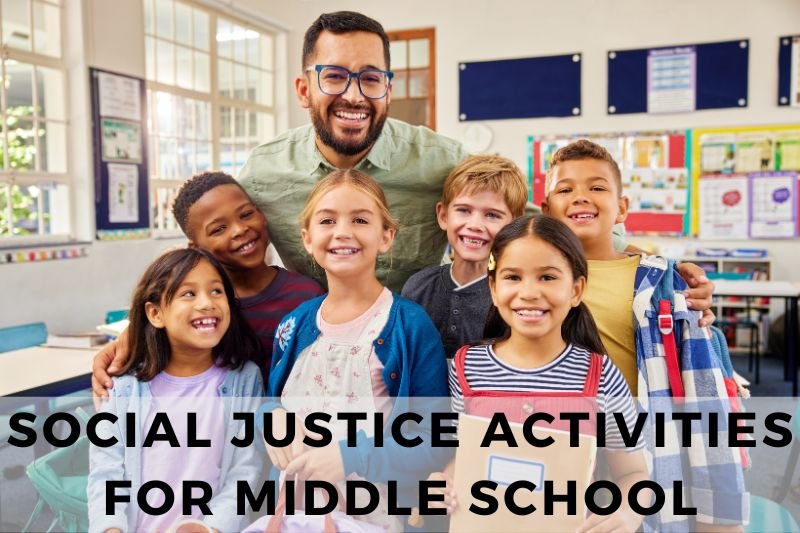
How can middle school students make a difference in their communities? Social justice activities can empower young minds to think critically and act responsibly. Middle school is the perfect time to teach students about equity, inclusion, and community involvement. These activities build empathy and awareness while encouraging positive action.
Students learn to address issues that affect their peers and neighborhoods. Hands-on projects and collaborative efforts make lessons meaningful and lasting. With the right guidance, students can become advocates for change. In this post, we’ll explore ten engaging social justice activities tailored for middle school students.
10 Social Justice Activities for Middle School Students
#1. Community Service Projects
Community service projects teach middle school students the importance of giving back. These projects can range from organizing a neighborhood cleanup to collecting donations for local shelters. Students gain practical skills like teamwork, problem-solving, and project management. They also develop a sense of responsibility and community pride.
To get started, encourage students to identify a local need. Facilitate brainstorming sessions to generate ideas, then guide them through planning and execution. Schools can partner with community organizations to provide real-world opportunities. Reflecting on their experiences afterward helps students understand the impact of their efforts and encourages long-term civic engagement.
#2. Diversity Awareness Workshops
Diversity awareness workshops foster respect and understanding among students from different backgrounds. These workshops create safe spaces for discussions about race, culture, and identity. Students learn to appreciate differences and challenge stereotypes. Activities like role-playing and storytelling help make abstract concepts relatable.
To implement, start with icebreaker activities that build trust. Introduce guided discussions that address biases and promote empathy. Involve guest speakers from diverse communities to share personal experiences. Use multimedia presentations to highlight global perspectives. Follow up with group reflections to help students process new insights and reinforce inclusive attitudes.
#3. Anti-Bullying Campaigns
Anti-bullying campaigns empower students to address and prevent bullying in their schools. Campaigns can include posters, assemblies, and peer mentorship programs. Students learn to recognize bullying behaviors and practice positive intervention strategies. By involving peers, campaigns promote a culture of accountability and kindness.
Start by conducting a survey to understand bullying issues specific to your school. Use data to design targeted activities, like workshops on empathy and conflict resolution. Train student leaders to facilitate discussions and offer support. Incorporate creative elements like video presentations to spread awareness. Track progress and celebrate improvements to keep momentum going.
#4. Environmental Justice Initiatives
Environmental justice initiatives teach students about the intersection of environmental issues and social equity. Projects can include planting trees, reducing waste, or advocating for clean water in underserved areas. Students learn that environmental problems often disproportionately affect marginalized communities.
Begin by discussing the concept of environmental justice and its relevance to students’ lives. Engage them in researching local environmental challenges. Facilitate group projects to address specific issues, such as starting a recycling program. Connect with local environmental groups for mentorship and collaboration. Reflection activities help students connect their actions with broader social impacts.
#5. Cultural Exchange Programs
Cultural exchange programs help students learn about different cultures through direct interaction. Activities may include language exchange, food fairs, or virtual connections with students from other countries. These programs break down cultural barriers and promote global citizenship.
Start by identifying cultures represented in the school community. Organize events where students share traditions, food, and stories. Incorporate multimedia presentations to showcase global diversity. Virtual exchanges with international classrooms can enhance learning. Debrief with discussions about cultural similarities and differences, emphasizing respect and curiosity.
#6. Social Media Advocacy
Social media advocacy trains students to use digital platforms responsibly to address social issues. Campaigns can include awareness posts, online challenges, and infographics about topics like equality or mental health. Students learn digital literacy while amplifying positive messages.
Guide students on crafting clear, impactful messages. Teach them how to verify information and cite credible sources. Encourage creative content like videos or artwork to engage followers. Monitor online interactions to promote respectful dialogue. Debrief on the campaign’s reach and impact, discussing lessons learned and areas for growth.
#7. Fundraising for Local Charities
Fundraising activities give students practical experience in organizing events for a cause. Ideas include bake sales, talent shows, or crowdfunding campaigns. Students develop leadership skills while supporting local initiatives. Fundraising also fosters empathy as they learn about the needs of others.
Start by discussing potential causes and selecting one that resonates. Create a plan detailing the event, budget, and promotion strategies. Assign roles to ensure smooth execution. Teach students to track funds transparently and report results to the community. Reflect on the experience by discussing challenges and celebrating successes.
#8. Student-Led Discussions on Equity
Student-led discussions empower young people to share their thoughts on fairness and justice. Topics may include racial equality, gender issues, or economic disparity. Facilitating these conversations helps students develop critical thinking and public speaking skills.
Begin by training student leaders in moderation techniques. Offer guidelines on respectful dialogue and active listening. Allow students to choose topics that matter to them, fostering ownership and engagement. Incorporate multimedia resources to provide context. After discussions, encourage participants to share personal takeaways and consider action steps.
#9. Art for Social Change Exhibitions
Art exhibitions focusing on social justice themes provide a creative outlet for expressing ideas and experiences. Students use visual arts, poetry, or performance to highlight issues like discrimination or human rights. These exhibitions encourage creativity while fostering dialogue.
Guide students in choosing a theme related to social justice. Facilitate workshops on using art as a medium for advocacy. Provide space to display their work and invite community members to view and discuss the pieces. Incorporate guided reflections to help students articulate the message behind their art.
#10. Peer Mediation Training
Peer mediation trains students to help resolve conflicts among their peers. It promotes peaceful problem-solving and reduces disciplinary issues. Trained mediators develop communication skills and model positive behavior within the school.
To implement, select students with good interpersonal skills. Provide training on active listening, neutrality, and problem resolution. Role-play scenarios to practice mediation techniques. Create a system for peers to request mediation when conflicts arise. Support the program with staff mentors to oversee and guide the process. Celebrate successful resolutions to build program credibility.
Closing Thoughts
Social justice activities for middle school students foster empathy, critical thinking, and community involvement. By engaging in these projects, students learn to advocate for positive change while developing essential life skills. Whether through community service or creative expression, these activities encourage young people to think beyond themselves.
They learn to address real-world issues and make a lasting impact. Educators play a key role by guiding and supporting these initiatives. By encouraging active participation, schools help build a generation that values justice and inclusion. Start small, stay consistent, and watch students grow into thoughtful, responsible citizens.